A new innovation district built around a park.
Mediopadana Innovation District
location: Reggio Emilia, Italy
client: Rosa Real Estate
status: invited competition, finalist - 2025
collaborators: Alessandro Molesini, Omar Ben Hamed, Alberto Procaccini, Emmanuel Serio, Jacopo Moschini, Chiara Gandolfi
program: innovation park images: Filippo Bolognese Images landscape designer: Silvia Ghirelli
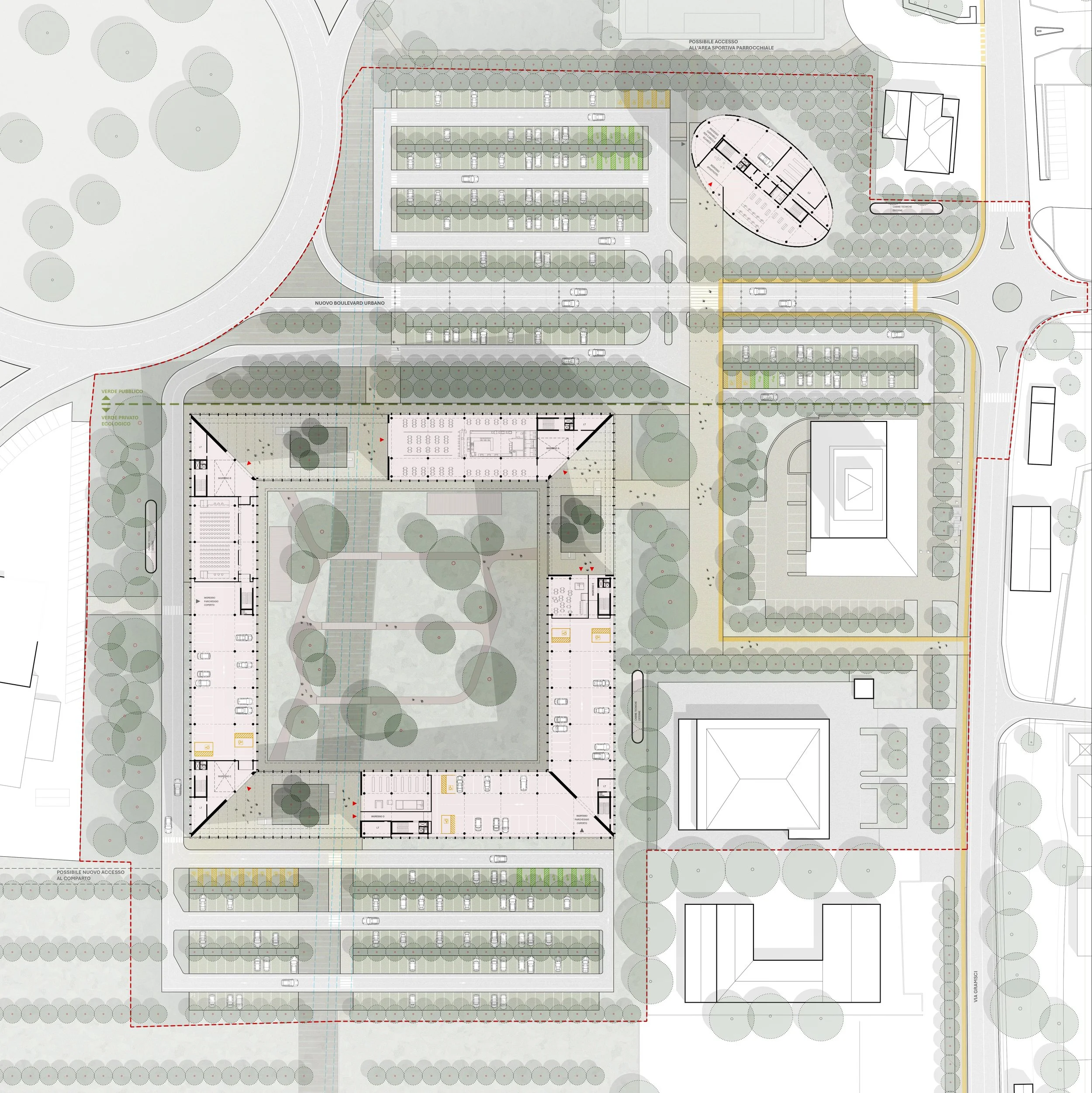
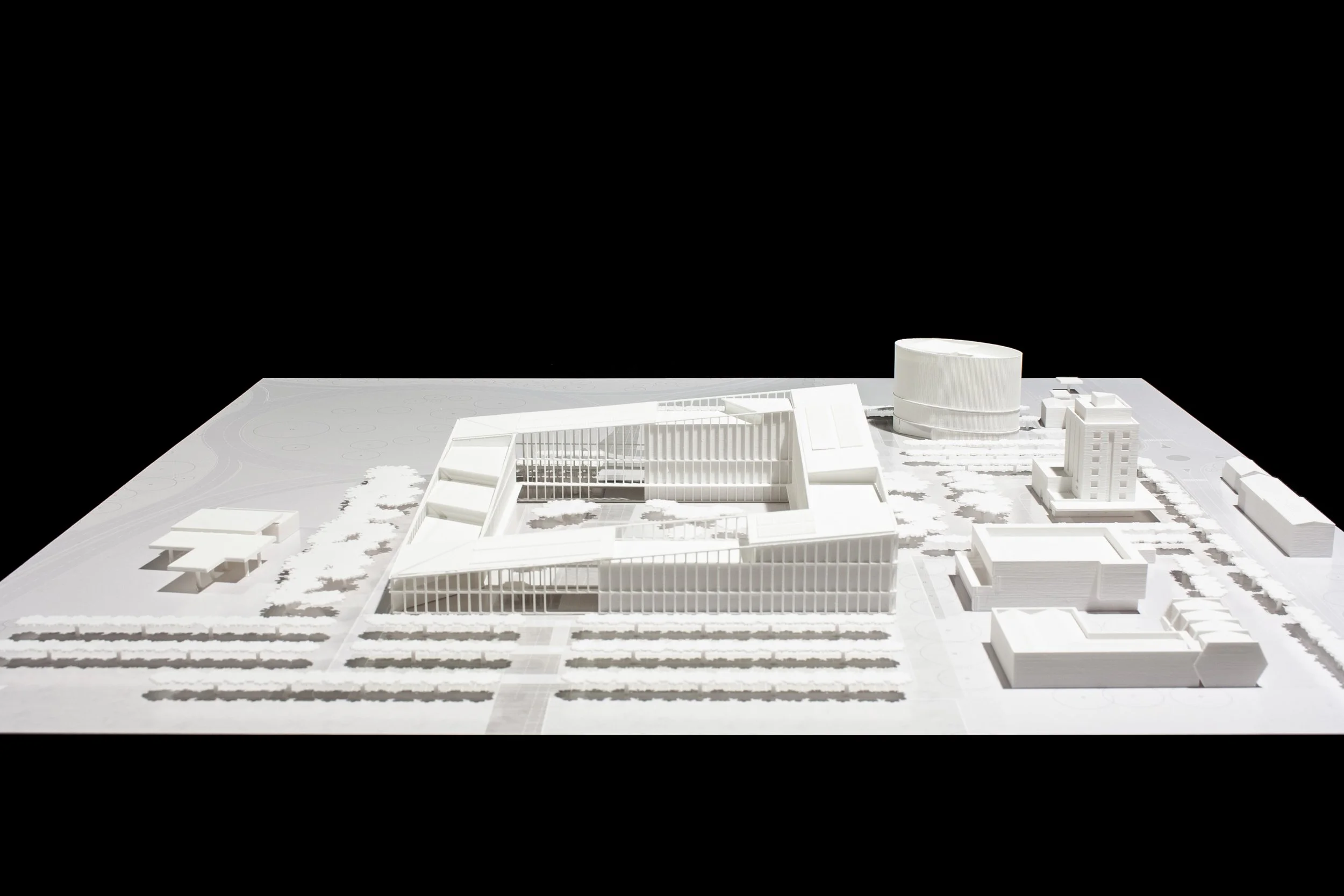
The Mediopadana Innovation District, strategically located in the northern area of the city of Reggio Emilia, is a hub for the development of high value-added services for the advanced tertiary sector, aiming to contribute to the city’s sustainable and competitive growth by enhancing its attractiveness. The project concerns a greenfield, peri-urban area with exceptional potential, thanks to its strategic position close to the Mediopadana High-Speed Rail Station and the A1 motorway exit, as well as its central location within the northern area. The masterplan integrates the Spark-Security and 7Tower buildings into the design of pathways, access points, outdoor spaces, parking areas, and landscape, ensuring integrated development of the entire site and creating functional, connective, and architectural synergies.
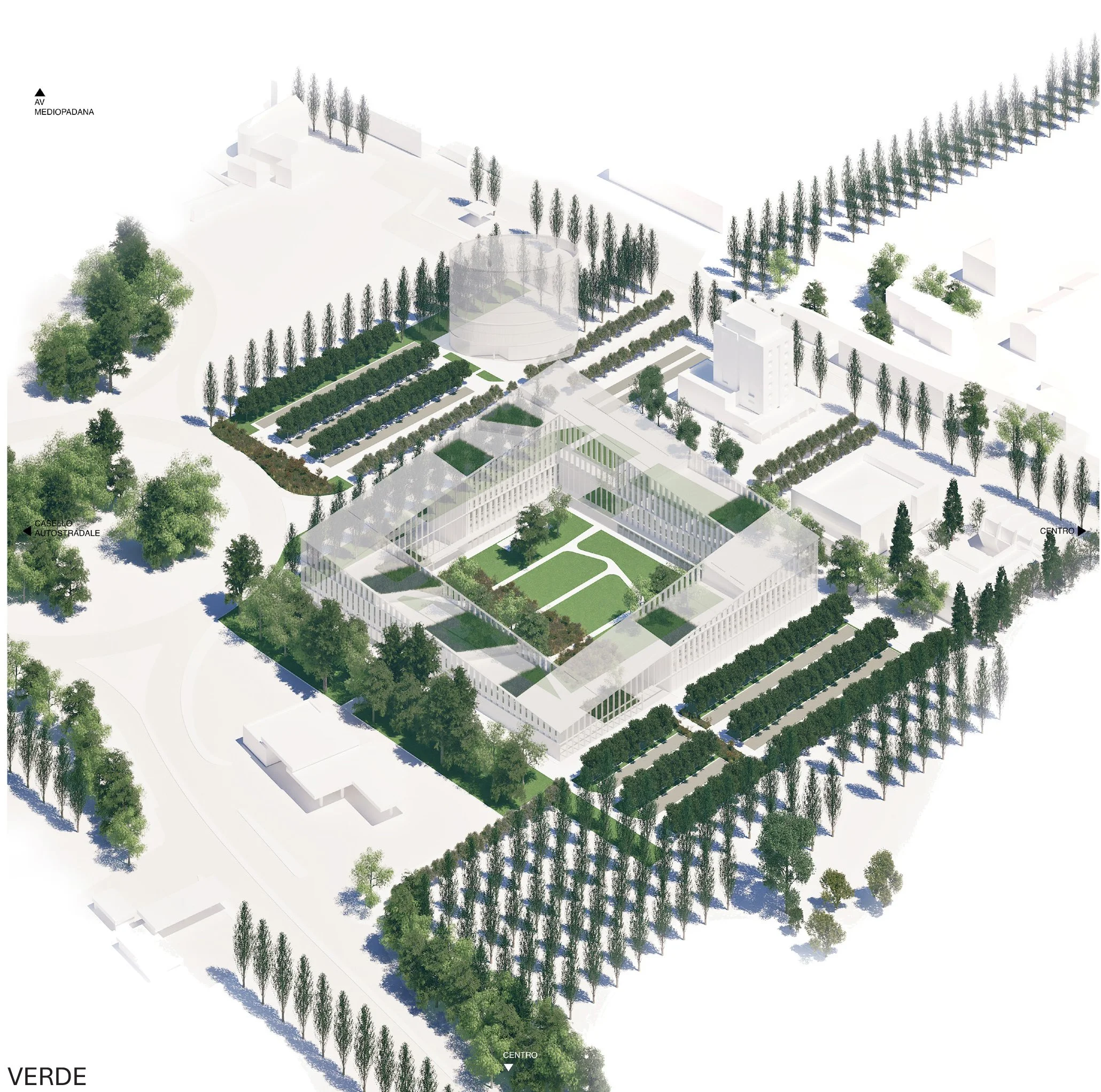
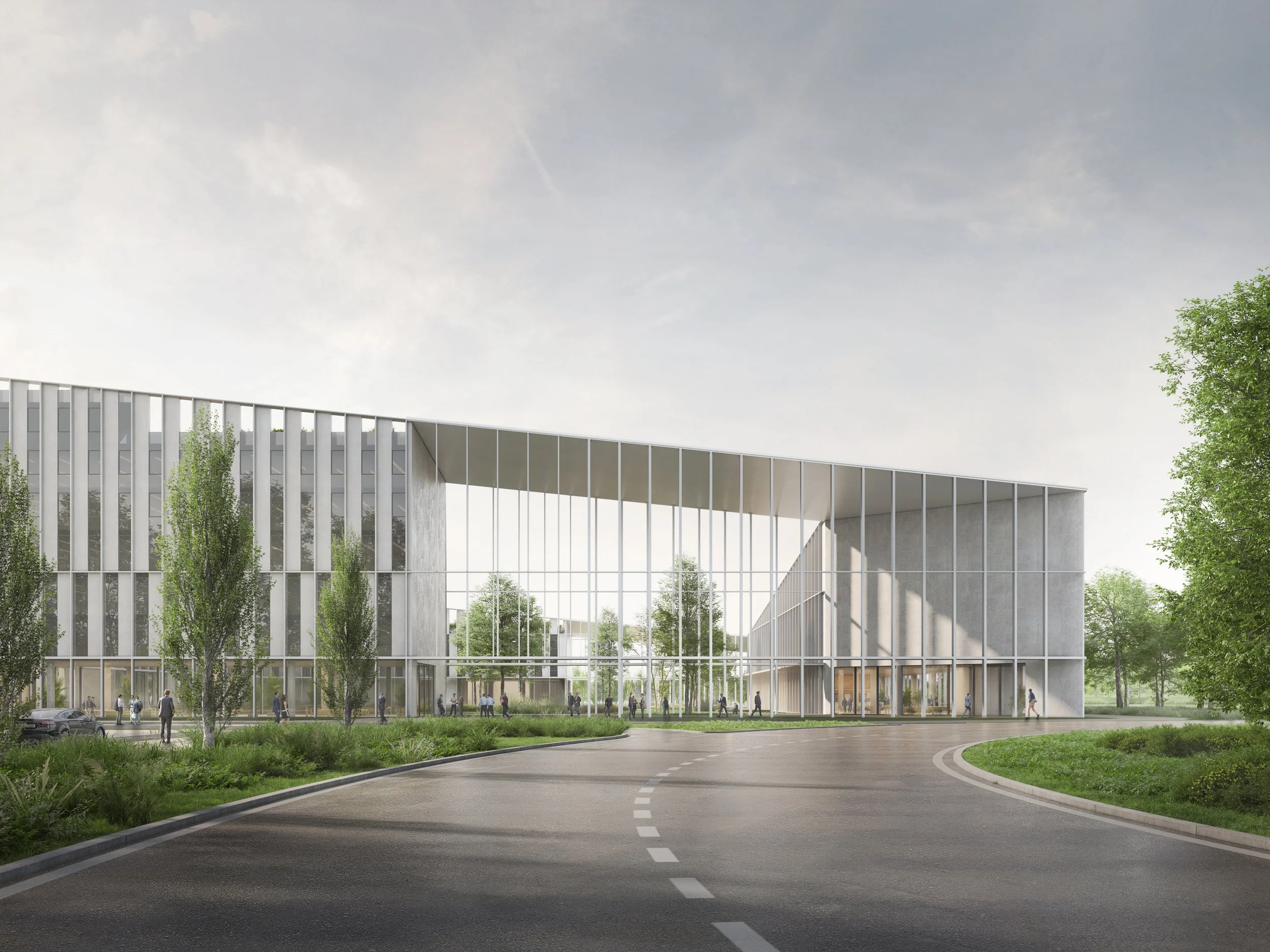
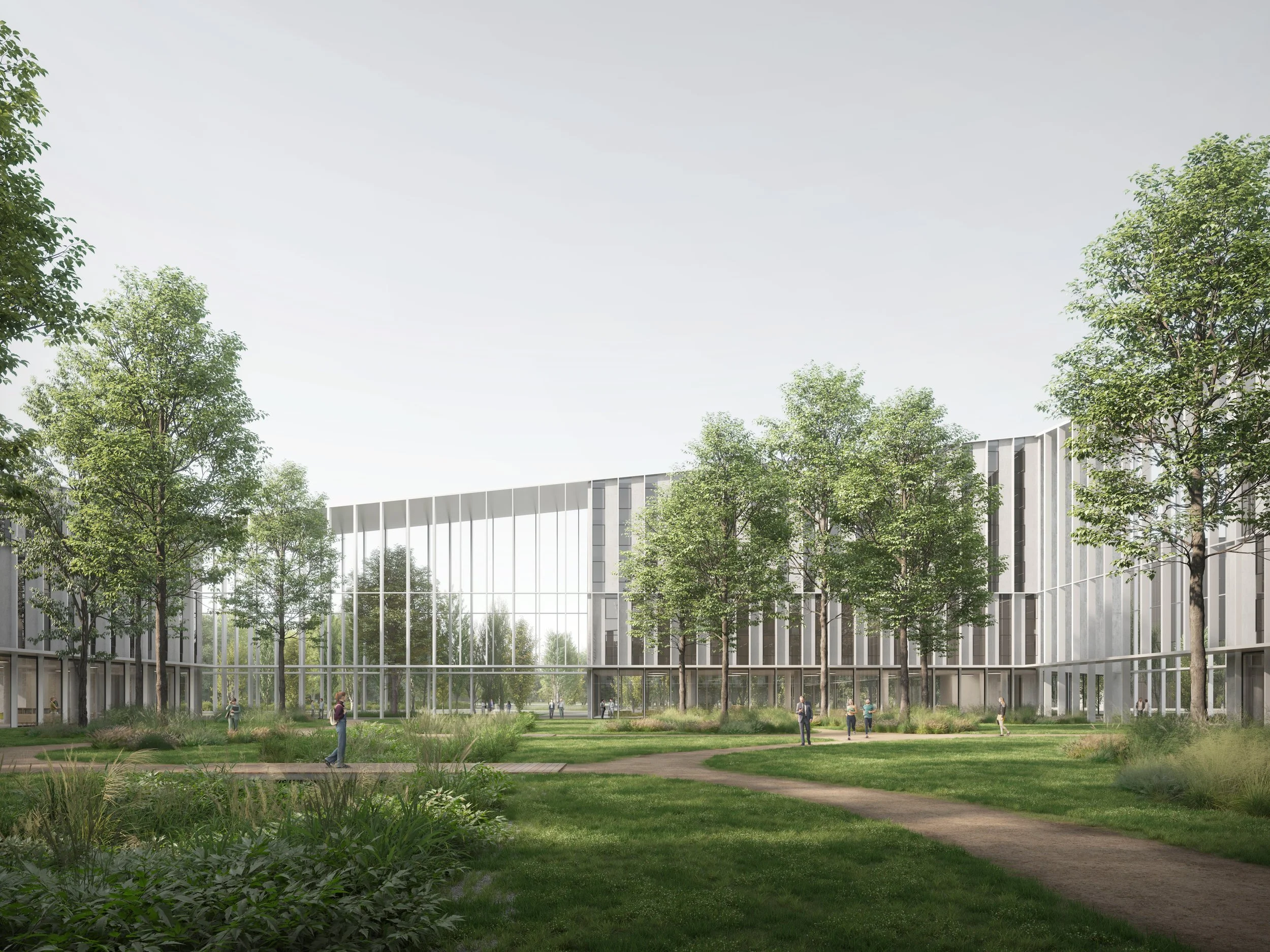
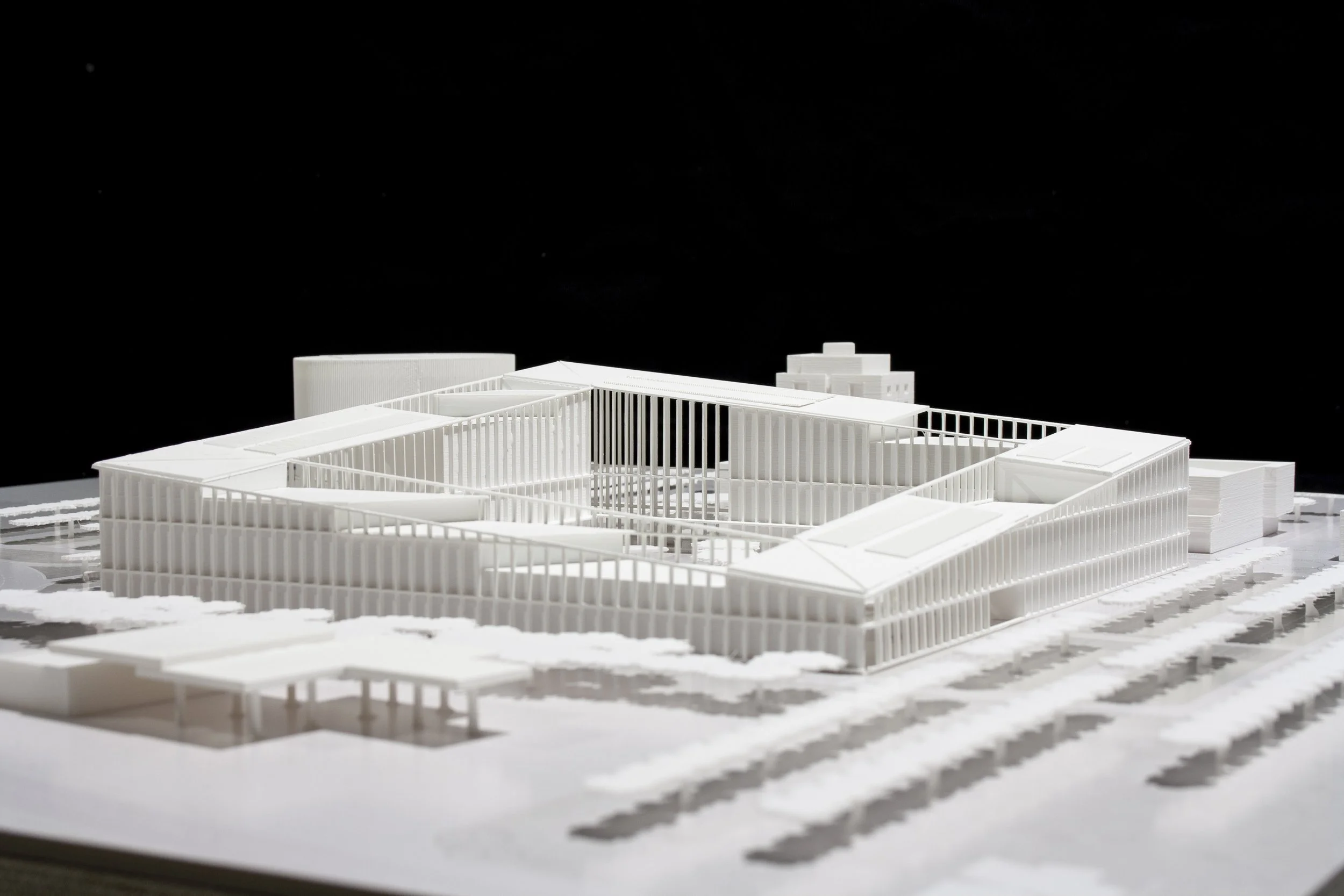
The project is conceived as a cohesive urban campus, organized around a large main building with a quadrangular layout, which defines an open and permeable central courtyard. The courtyard functions as the relational heart of the complex, fostering encounters, social interaction, and visual connections among the various functions.
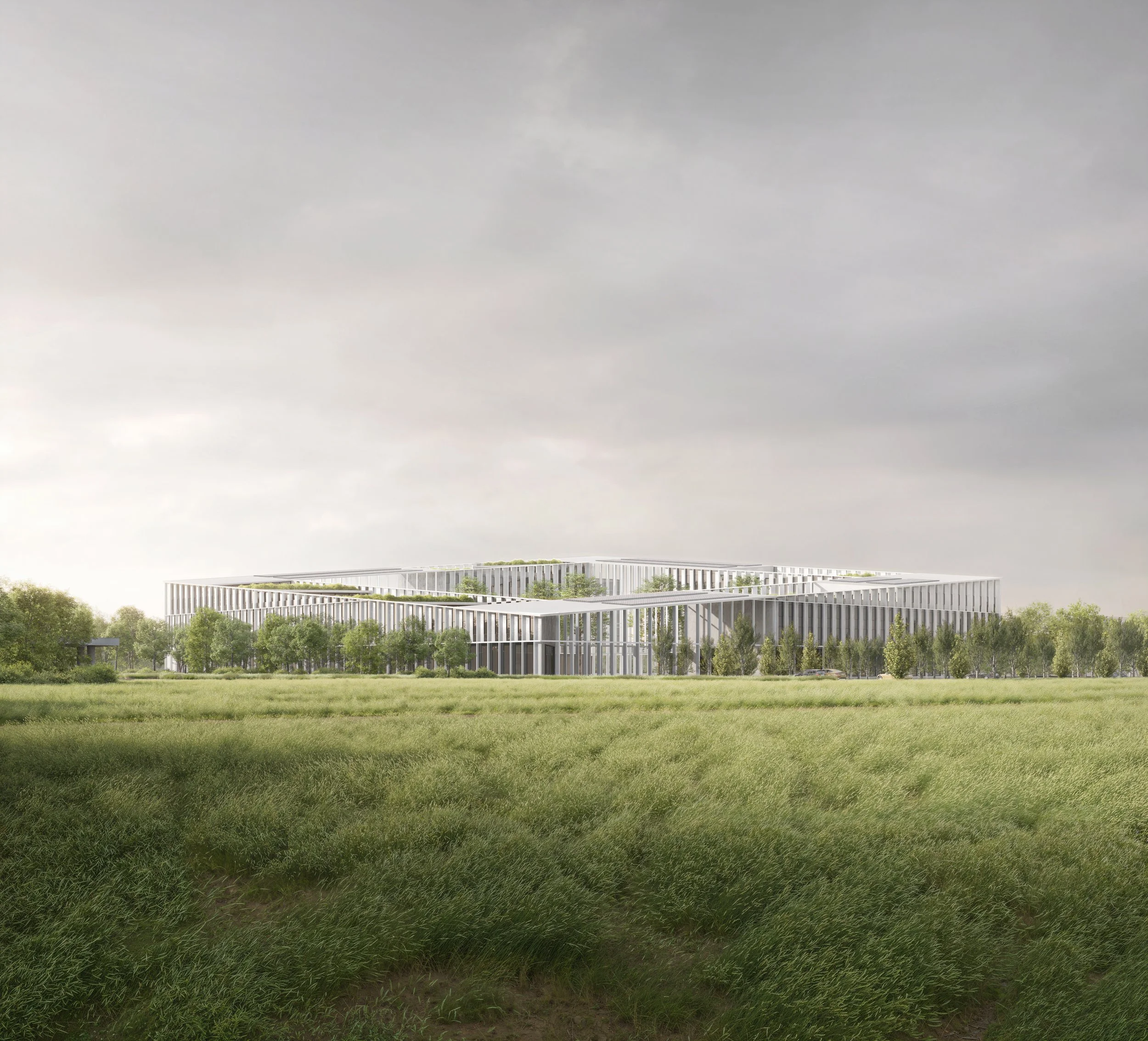
The main building presents a horizontal, compact volumetry articulated across multiple levels, with facades organized in a regular, modular rhythm. Repeated vertical elements convey transparency, lightness, and solar responsiveness. The internal courtyard reinforces a vision of architecture that is both introspective and permeable, engaging harmoniously with the surrounding landscape.
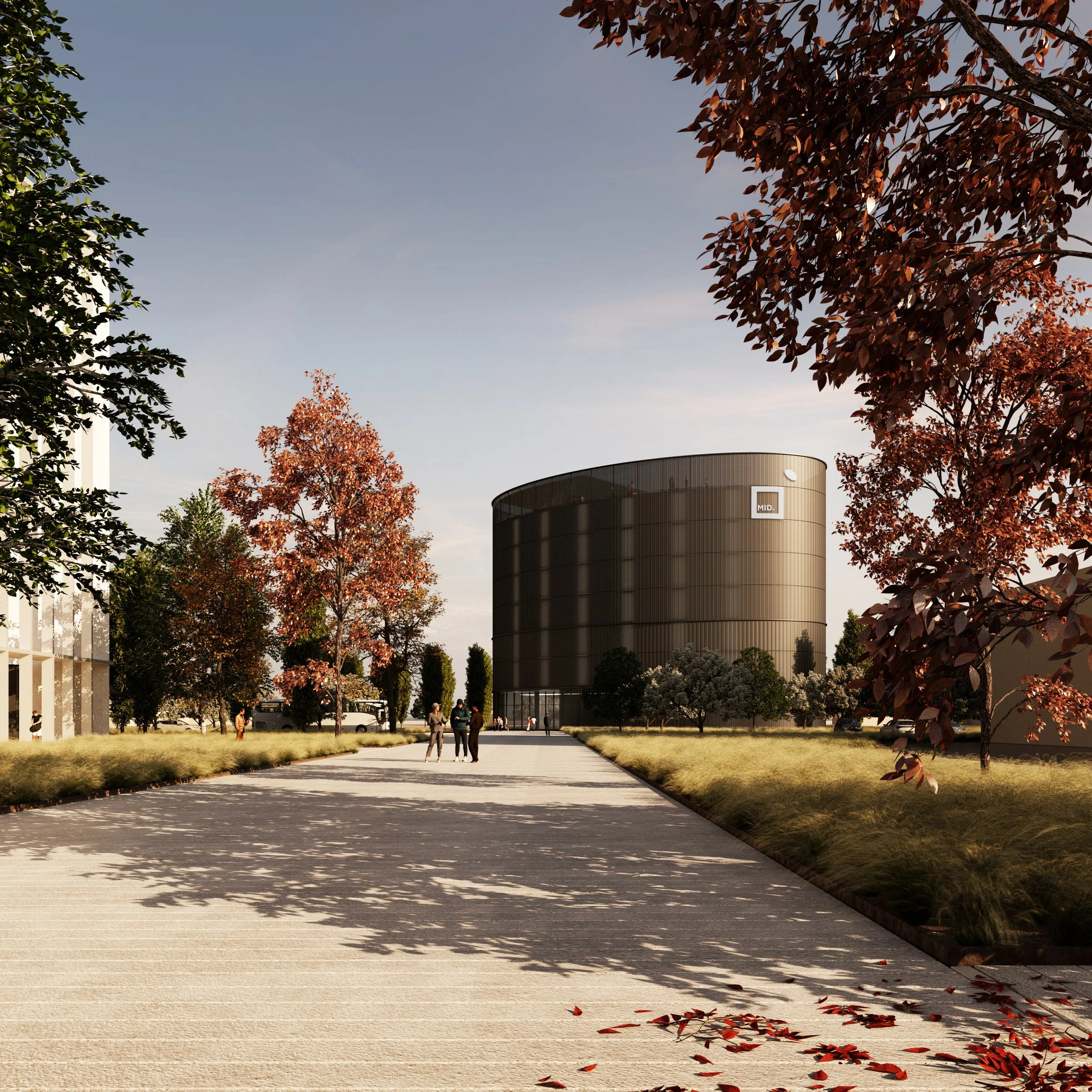
Encircling the main building are autonomous yet coordinated volumes of varied heights and forms: more compact, vertical structures, and a striking cylindrical volume that emerges as an iconic, recognizable landmark, likely intended for special or collective functions. This diversity in form establishes a clear spatial hierarchy while shaping a dynamic and expressive urban identity.
The open-space framework is integral to the project: tree-lined avenues, pedestrian pathways, and landscaped areas organize movement and use, thoughtfully separating vehicular circulation from areas dedicated to leisure and social exchange. The landscape is conceived as an environmental infrastructure, knitting the buildings together and reinforcing the campus’s distinctive character.
As a whole, the project embodies contemporary, rational, and institutional architecture, emphasizing functional flexibility, urban legibility, and the seamless integration of built and open spaces. It presents a vision of an innovative, well-structured hub designed to support advanced tertiary activities, offering both a functional and symbolic center for interaction, learning, and professional engagement.
The master plan defines and connects two fundamental elements, capable of establishing clear and articulated relationships with both the immediate surroundings and the broader area. The ambition is to create architectures capable of expressing civic strength and appeal within a marginal context undergoing rapid development around the extraordinary driver of the high-speed rail station, thus becoming, like it, indispensable elements of the contemporary landscape and city.
MID.SQUARE: a courtyard-based development centered around a green square, with buildings and tertiary functions as well as related activities (restaurants, retail, and personal services) arranged along it. These functions are located on the ground floor, adjacent to the courtyard and in proximity to parking areas and pedestrian access points. The buildings around the courtyard define an open yet well-defined space within its perimeter. The volume stands out with a highly recognizable skyline and image within an urban context characterized by heterogeneous, low-rise buildings.
MID.POINT: a tall, compact, ellipsoidal building that concentrates the hospitality function (business aparthotel or RTA with bi- and three-room units in an Airbnb-style formula, with services on the ground floor and top floor) in its vertical development along the business road. Set back in favor of via Gramsci and 7Tower, it is functionally autonomous yet integrated in terms of accessibility, pedestrian connections, and functional synergies with MID.SQUARE.